The Rules on Renting Out Changed Three Times This Year. Paphos in 2026
Three changes in one year, and most owners noticed none of them
A good half of the people we build for intend to let the place at some point. Some plan it from the first meeting, some decide two winters later when they realise they only use the house from May to October. Either way, the conversation we have with them in September 2026 is not the conversation we were having in September 2025, because Cyprus changed the rules on letting three separate times inside twelve months and did it quietly enough that plenty of landlords are still operating on the old ones.
On 1 January the special defence contribution on rental income was abolished. On the same day the stamp duty on tenancy agreements went with it. Then on 1 July it became unlawful to accept rent in cash, full stop. The first two put money back in the owner's pocket. The third one is the one that catches people out, and we have already had two buyers this summer tell us their tenant pays them in notes on the first of the month because it has always worked fine.
This is our attempt to set the whole thing out in one place: what actually changed, what it means for a new build specifically, and the parts of letting in Paphos that no law will ever tell you.
Cash is finished: every euro of rent now has to be traceable
The 2026 tax reform inserted a new article, 48A, into the Assessment and Collection of Taxes Law, and it took effect on 1 July 2026. From that date, rent on immovable property in Cyprus must be paid by bank transfer, debit or credit card, or another recognised electronic method. A landlord may not accept it any other way. There is no grace period and no informal tolerance for small amounts.
The confusion is worth explaining because it is still circulating. When the reform was first summarised, a great deal of coverage said the electronic requirement applied only to rents of five hundred euros a month or more. That threshold appeared in early drafts and early write-ups. It is not in the rule as it now stands. The Tax Department clarified in June that the obligation applies regardless of the amount of rent and regardless of the type or use of the property. A hundred euros a month for a lock-up garage falls under it just as much as a two thousand euro villa. If you set your arrangements up on the basis of a five hundred euro floor, they are wrong.
What happens if you ignore it is less dramatic than a fine and more annoying than one. Rent paid in breach of article 48A can be refused as a tax deductible expense, which is a serious problem for a business tenant and a nuisance for anyone claiming rent against income. For the landlord the exposure is different: you now have an income stream with no bank trail, at exactly the moment the authorities have built a system designed to compare rent received against rent declared. That is not a position we would want a client of ours to be in.
The practical fix takes ten minutes. Put the bank details in the tenancy agreement, name the account holder, ask for the rent as a standing order rather than a manual transfer so it does not depend on anyone remembering, and keep the statements. Tell the tenant to keep their side too, because they need to be able to show what was paid, when, to whom, for which property and for what period. In practice this is easier than the old way for both parties, which is usually a sign that a rule is a reasonable one.
The two charges that quietly disappeared in January
The better news came first and got far less attention. Until the end of 2025, rental income in Cyprus carried the special defence contribution at three per cent on seventy five per cent of the gross rent, an effective 2.25 per cent skimmed off the top before income tax was even considered. From 1 January 2026 it is gone. Rental income is now taxed under ordinary income tax and nothing else, apart from the health system contribution.
Income tax in Cyprus is genuinely gentle by European standards, and the reform widened the bands as well. The first twenty two thousand euros of income are tax free. From there it runs at twenty per cent to thirty two thousand, twenty five per cent to forty two thousand, thirty per cent to seventy two thousand, and thirty five per cent above that. A retired couple letting one apartment in Paphos and drawing a modest pension will often find the rent falls inside the tax free band entirely. The health system levy of 2.65 per cent still applies to rents, subject to the annual cap on total income, and that is now the only thing sitting on top.
The second removal was the stamp duty on the tenancy agreement itself, also abolished from 1 January 2026. It was never a large sum, calculated on the total rent over the term, but it was a real administrative step and people skipped it, which meant a lot of agreements sat unstamped and awkward if they were ever needed in court. That excuse is gone now, which is a reason to get the agreement properly drawn rather than a reason to care less about it. We go through the whole tax picture, including what you pay for simply owning and what happens when you eventually sell, in our guide to property taxes in Cyprus.
Why rent control does not reach a new build
This is the part that surprises British and northern European buyers most, and it is the single biggest structural difference between letting an old Paphos apartment and letting a new one.
Cyprus has a Rent Control Law with real teeth, but it applies to a defined set of properties. A tenant becomes a statutory tenant, the protected kind, only where the property was completed by 31 December 1999 and was let or available to let on that date within a controlled area. Where that applies, the landlord cannot simply serve notice at the end of the term, rent can be raised only every two years, and only by the percentage the Council of Ministers allows. For the current two year window, running from 22 April 2025 to 21 April 2027, that maximum is six per cent. Raise the rent unilaterally outside that and the increase is void.
Anything built after the end of 1999 falls outside it. A tenancy in a modern block is a contractual tenancy governed by the agreement you sign and by ordinary contract law. You agree the term, you agree the review, and when the term ends it ends. We are not telling you this so you can be hard on a tenant, and the sensible landlords we know keep good tenants by charging them slightly under the market rather than by exercising rights. We are telling you because the risk profile of the two assets is genuinely different, and a buyer comparing a cheap thirty year old apartment with a new one on yield alone is comparing two things that are not the same instrument.
It also matters at the exit. A protected tenant in occupation is a real drag on a resale price. A contractual tenancy on a modern flat, with clean title deeds behind it, is a straightforward thing to sell.
The agreement itself, and the three things people get wrong
Cyprus does not prescribe a format for a residential tenancy, which tempts people into a one page letter. Three points are worth getting right, and none of them cost anything.
First, a tenancy running longer than twelve months has to be signed in front of two witnesses. It is a small formality and it is very easy to overlook when the agreement is emailed back and forth between a landlord in Manchester and a tenant in Paphos. Second, open ended leases are not permitted here. If you write one, the courts treat it as a periodic tenancy instead, which is probably not what either party had in mind. Agree a term and a renewal mechanism. Third, put the electronic payment clause in explicitly now that article 48A exists, naming the account and the payment date, so that neither side can drift back into cash by habit.
On deposits, one or two months is the custom and two months is normal for a furnished property. The deposit can be held against unpaid rent, unpaid utilities and damage beyond fair wear and tear, and nothing else, which is why the inventory you take on the first day is worth more than the clause you write about it. Photograph everything, including the meter readings, and send the tenant the file rather than keeping it on your own phone.
What actually lets in Paphos, and what sits empty
Now the part that is our own opinion rather than the law, formed from watching what happens to the buildings we hand over.
Parking decides more long lets in Paphos than any feature except price. A two bedroom apartment with a dedicated covered space will let faster and for more than a slightly nicer one without, because almost nobody living here year round manages without a car and street parking in the older parts of town is a daily irritation. It is the least glamorous line on a specification and it is the one we would never cut.
Air conditioning in every bedroom, not just the living room, is the second one. Summer here does not negotiate, and a tenant who spends one August in a back bedroom with a fan will leave in September. A proper laundry provision comes third. Cyprus apartments have a long habit of putting the washing machine on the balcony, and long term tenants, particularly families, quietly hate it. Give the machine a place indoors and you have removed a reason for someone to keep looking.
After that: storage, a lift if you are above the second floor, insect screens on every opening rather than the two the builder felt like fitting, and shutters that actually black out a bedroom. None of that is exotic and all of it is the difference between a flat that re-lets in a fortnight and one that sits empty through the winter waiting for the spring market. The energy rating matters too, and increasingly tenants ask about it before they ask about the kitchen, because they are the ones paying the summer electricity bill. We wrote separately about why we build to a higher standard than the regulations require in our piece on energy efficient new homes in Cyprus, and the letting market is quietly rewarding it.
Location behaves differently for a long let than for a holiday let, and this is where people importing assumptions from the tourist market go wrong. The sea view that fills a summer calendar is worth less to a family on a twelve month lease than being ten minutes from a school and a supermarket. Areas like Universal, Anavargos and Geroskipou do better on long lets than their sale prices suggest, and we go through the trade-offs district by district in our guide to the best areas to buy property in Paphos.
The yield arithmetic, done honestly
We are wary of published yield figures, including the flattering ones about Paphos, because almost all of them are gross and gross yield is a marketing number. Here is the honest version of the sum, which you can do in a minute with your own figures.
Take the achievable monthly rent, not the optimistic one, and multiply by twelve. Then take off the things that are certain: communal charges on an apartment, buildings insurance, and the agent's fee if you use one, which is usually a month's rent to find a tenant. Then take off the things that are likely: a maintenance allowance, and a void allowance, because tenancies end and a flat that re-lets in six weeks has lost eleven per cent of that year's rent. Then apply income tax at your own marginal rate and the 2.65 per cent health levy. What is left over the purchase price including all the buying costs is your actual return, and it is usually one to two percentage points below the number in the brochure.
We would rather a buyer ran that sum and bought with clear eyes than took a headline figure and felt misled in year two. Rents in Paphos have risen substantially over the last three years and the yields available on a well specified new apartment are genuinely decent by European standards. They are not the numbers that appear on investment websites. Our broader read on where prices, rents and supply actually sit is in the Paphos property market outlook for 2026, and the longer question of whether the whole thing stacks up is in is Cyprus property a good investment.
Long let or holiday let is a choice, not a spectrum
People arrive wanting both: a long tenancy for the winter and holiday lets through the summer when the rates are four times higher. It almost never works, and not for legal reasons. Short lets in Cyprus need registration with the Deputy Ministry of Tourism, they carry their own reporting obligations, and from 2026 the platforms report your earnings to the tax authorities under the EU rules. Beyond the paperwork, the two businesses need different things from the same building: one wants a cleaner, a key handover and a linen cycle, the other wants a tenant who treats the place as home and never calls you. Trying to run both usually produces a property that is mediocre at each.
Pick one and specify for it. If it is holiday lets, read our guide to the short-term rental rules in Cyprus before you list a single night, because the registration and the fines are both real. If it is long lets, everything above applies and the specification decisions are the ones that will decide your return.
Our view on the cash rule, which is not the popular one
A fair number of people in this industry grumbled about article 48A. We think it is the best thing that happened to the Cypriot rental market this year, and we would have supported it earlier.
An informal cash market does not protect small landlords, it protects bad ones. It makes rent impossible to prove, which hurts tenants applying for residency, credit or a school place. It leaves honest owners competing on price against people who are not declaring, which pushes the whole market towards the shadows. And it made the rental data so poor that nobody, including us, could say with confidence what a two bedroom flat in a given part of Paphos actually rents for. Traceable payments fix all three, slowly. The same instinct sits behind the building inspection reforms going through this year, and we have said the same thing about those: an industry that objects to being checked is telling you something.
Where we would push back is on sequencing. Cyprus removed the defence tax on rents, removed the stamp duty and formalised the payments all in one year, which is a lot of change for landlords who mostly own one property and do not have an accountant on retainer. Almost none of it was explained in plain language to the people it applies to. The five hundred euro threshold that never existed is still being repeated by estate agents in August. If the state wants compliance rather than a stream of penalties in 2027, a letter to every registered owner would have cost very little.
One last thought
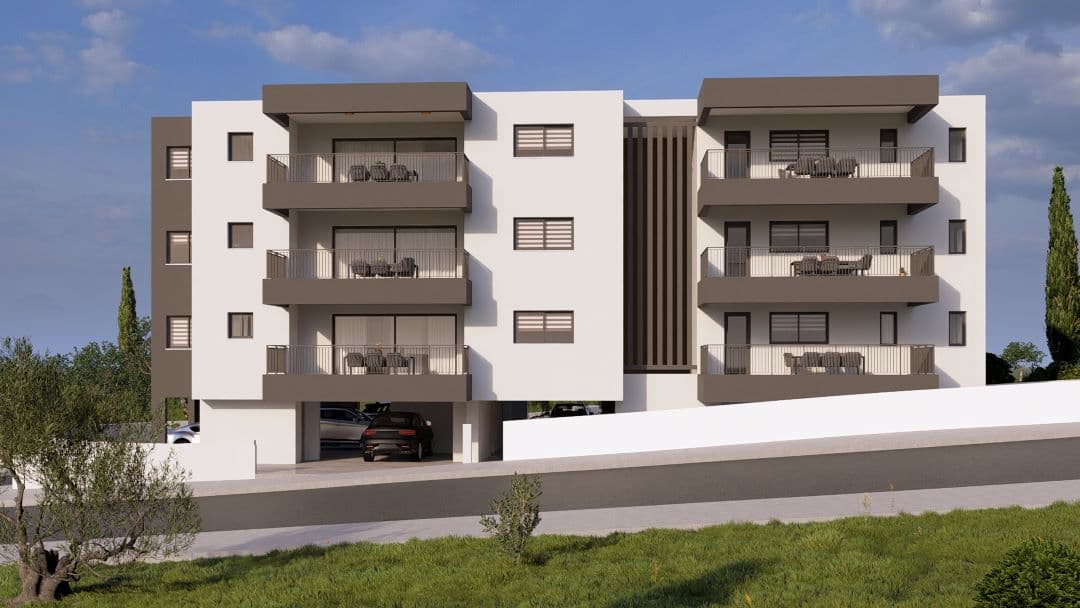
The building in the photograph at the top of this page is one of ours, and a good number of the apartments in it are let rather than lived in by the owner. When we designed it we were not thinking about article 48A, because it did not exist. We were thinking about covered parking, indoor laundry space, air conditioning in the back bedrooms and shutters that work, and it turns out that those decisions are still the ones that determine whether an owner gets a tenant who stays four years or a flat that empties every spring. The law changed three times this year. What lets a home in Paphos did not change at all.
Buying it to let? Tell us that first.
Parking, laundry provision, storage and the energy rating are cheap to get right at plan stage and expensive to fix afterwards. Tell us the property is going to be let and we will specify it that way.