Permits, Costs and the Forty-Day Promise Building in Cyprus, 2026
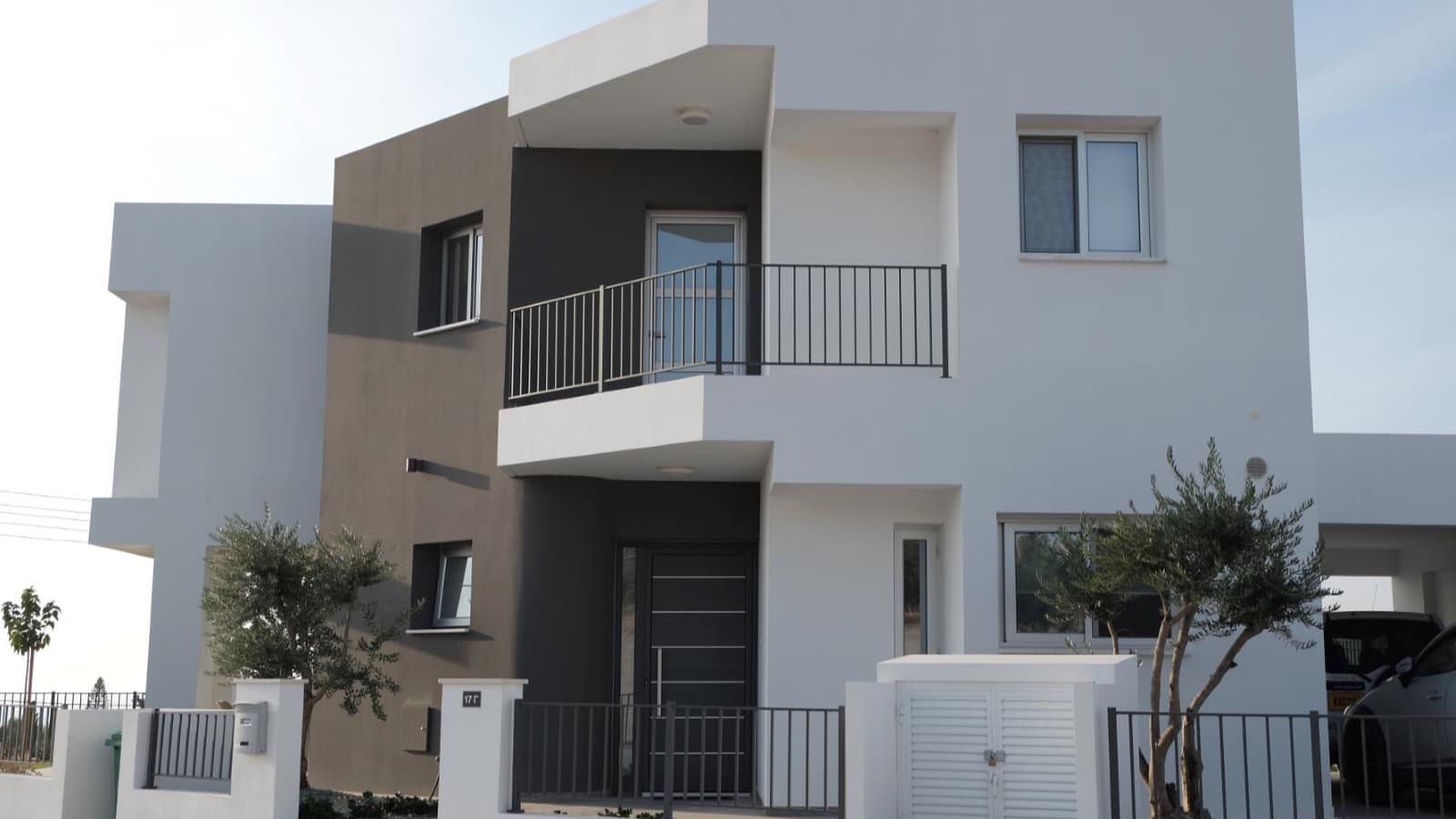
Everybody asks the questions in the wrong order
The first thing people ask us about building their own house in Cyprus is what it costs per square metre. The second thing they ask is how long the permits take. Those two questions belong the other way round, because the permit decides the shape of the house, the shape of the house decides the structure, and the structure is where most of the money goes. Someone who budgets from a per square metre figure before anyone has looked at their plot is budgeting for a house that may not be legal to build on it.
Two things have changed enough this year to be worth writing down properly. The permit system has been rebuilt around a digital platform with statutory deadlines, and the volume of permits coming through that platform has gone up in a way nobody in the industry expected. Both of those affect what you will pay and how long you will wait, and neither is being explained very well to people buying land here.
Two permits, and they are not the same thing
Almost every house in Cyprus needs two separate approvals. The planning permit tests the proposal against the zoning of the plot: permitted use, density, coverage, height, setbacks, and the environmental constraints that apply to that particular piece of land. It sits under the Town and Country Planning Law of 1972. The building permit is a different exercise, carried out under the Streets and Buildings Regulation Law, and it checks the technical design. Structure, fire, energy performance, accessibility, drainage.
People conflate the two constantly, and it causes real damage. Planning tells you whether you may build a house of roughly that size and position. Building tells you whether the house you have actually drawn can be built safely. A plot can sail through the first and then cost you thirty thousand euros in the second because the ground conditions demand a retaining structure nobody priced. If you have not bought your land yet, the checks that matter before you sign are in our guide to buying land in Cyprus, and we would rather you read that before you read the rest of this.
Since July 2024 both applications are filed electronically through IPPODAMOS, the government planning portal. Paper submissions to the district office are gone. What went with them is more interesting than the convenience: the licensed designer now certifies that the submission is accurate and complete against a statutory checklist, and carries the responsibility for that certification. The state has moved from checking the file to holding somebody accountable for it.
What the fast track actually is
The fast track is the part everyone has heard about and almost nobody has read. It sorts applications by risk. Category A covers low-risk developments of up to two residential units, which is most private houses and most small plots. For those, the authority has twenty working days to deal with the planning application and twenty working days for the building permit. Roughly forty working days for both, which is around eight weeks on a calendar.
The part that gives the deadline teeth is what happens if the authority misses it. The application is treated as granted and the permit issues automatically through the system. That is a genuine shift. For decades the default in Cypriot planning was silence, and silence favoured the office rather than the applicant. Now silence favours you.
Category B was phased in afterwards and covers medium-risk work: up to twelve residential units, or an apartment building of up to twenty apartments and four storeys, with a combined target of around eighty working days and closer scrutiny at every stage. Anything larger, anything commercial, and anything that triggers an environmental impact assessment goes through the standard route and moves at the speed of the departments it has to consult, which is to say not quickly.
Our honest experience of the forty days
The deadline is real. It is also conditional, and the condition is a complete file. The clock starts when a valid application lands, not when you decide you would like to build something, and what takes time in practice is everything that happens before submission. Title checked and clean. Access to a registered road or a properly documented right of way. Confirmation of how the plot connects to water and sewerage, which in parts of the Paphos district is not a formality. Consent from the mortgagee if the land is charged. Any specialist study the site drags in.
So the honest version is this. The reform did not remove work. It moved the work forward into the design stage, and it moved the consequences of getting it wrong onto the designer. We think that is correct, and we also think it has made good architects slower and more careful at the front end, because they are now signing for the file rather than submitting it. If your designer comes back with a list of questions about your plot before drawing anything, that is not obstruction. That is the system working.
The failure mode we see most often is an owner pushing to submit early with something missing, then losing three months to a rejection that a fortnight of preparation would have avoided. A planning permit is normally valid for three years from issue, so you have room to be patient at the start. Building on an expired permit is treated as building with no permit at all, which is a far more expensive problem than a slow February.
What it costs to build in 2026
For a private house in Cyprus in 2026, budget somewhere between €1,700 and €2,500 per square metre for the build itself, land excluded. That range covers external works as well, so driveways, boundary walls and landscaping, and the bottom of it is only reachable with modest finishes on a straightforward plot.
You will find a government-derived figure of around €1,200 per square metre quoted in older articles. It is not wrong, it is simply measuring something else: the permit value of the building envelope, without external works, and from a period when materials cost less. Anyone budgeting a real house from that number will be short by a third. We have watched people do it and then blame the builder for the gap.
What moves you up the range is almost never the kitchen. It is a sloping plot, a basement, retaining walls, poor ground, a pool, and the mechanical and electrical specification, which is the single most underestimated line in Cypriot residential budgets. Heat pumps, underfloor systems, solar provision and proper insulation detailing are where the long-term running cost of the house is decided, and we have written separately about energy-efficient new homes in Cyprus because it deserves more than a paragraph.
Materials themselves have calmed down, and this is the part of the story the market has not caught up with. The construction materials price index reached 120.67 in April 2026 against a 2021 base, up 0.64 per cent on the month and 1.38 per cent on the year. Electromechanical products rose fastest at 2.29 per cent, metals 1.81 per cent, timber and insulation 1.76 per cent, minerals 1.59 per cent, and mineral products barely moved at 0.06 per cent. After the shocks of 2021 and 2022, annual growth of well under two per cent is close to boring, and boring is exactly what you want when you are signing a fixed-price contract.
Which leads to an opinion we will state plainly: materials are no longer the reason Cypriot construction is expensive. Labour availability and programme risk are. That is a harder problem than a price index, and it is getting harder for the reason below.
The permit boom nobody planned for
Between January and April 2026, Cyprus authorised 2,915 building permits, up 35.1 per cent on the same months of 2025. Their total value reached €1.67 billion, up 46.1 per cent, across 1.35 million square metres of floor area. The number of dwelling units in those permits was 7,131, a rise of 65 per cent. January on its own produced 789 permits, a 76.9 per cent jump on January 2025.
A faster permit system is part of that, and so is genuine demand, and there is also a queue of projects that had been waiting on approvals and cleared all at once. Whatever the mix, the practical consequence for anyone building a single house is the same. Every one of those permits will eventually want the same excavators, the same steel fixers, the same plasterers and the same tiling crews, in an island with a finite number of them.
So our advice for 2026 is contrarian in a small way. Spend less energy negotiating the headline price and more on the programme. Ask who is actually on site, how many other jobs that team is running, and what happens contractually if the build overruns. A contract that is ten thousand euros cheaper and nine months longer is not cheaper. The wider conditions behind all of this are in our Paphos property market outlook for 2026.
Self-build or buy finished, honestly
We build and sell houses, so treat what follows with the scepticism it deserves, but we would rather say it than have you find it out later.
Self-building genuinely wins when you already own the land, when you want something specific enough that no developer would build it speculatively, and when you have the time and temperament to run a project for eighteen months. You capture the developer margin. You get exactly the house you drew.
It loses when any of those three are missing. You carry the cost overrun rather than passing it to someone else. Financing a self-build is harder than financing a purchase, because banks release against stages and value the land conservatively, which we cover in our guide to Cyprus mortgages for foreign buyers. And the VAT position is different in ways that catch people out, because the reduced rate on a primary residence depends on thresholds and conditions that apply to your build as much as to a purchase. Read VAT on property in Cyprus before you finalise the floor area, not after. A design that drifts past a threshold by four square metres is an expensive piece of drawing.
For most overseas buyers we meet, the decision comes down to whether they will be in Cyprus during the build. If you will be here and you enjoy the process, build. If you will be in Manchester answering photographs on WhatsApp, buy something already under construction from someone you have checked properly, and use our questions on choosing a property developer in Paphos to do the checking.
The paperwork that decides what you own
A finished house is not a finished project. The district authority signs off the works, the certificate of final approval follows, and the separate title deed follows that. Unauthorised deviations from the approved drawings block the certificate, and without the certificate the title does not issue. That is how a perfectly solid house ends up unmortgageable and difficult to sell, and it is the single most common structural defect in Cypriot property ownership. Our guide to title deeds in Paphos sets out how that chain works and where it breaks.
The balcony that grew by half a metre during construction feels like nothing at the time. It is a deviation from the permit, and deviations have to be regularised before sign-off. Oversight during the build is about to tighten further, with independent building inspectors under consultation this year, and we have set out what that would change in our piece on Cyprus building inspections in 2026. Build to the drawings, or change the drawings. Do not do the third thing.
What we would do
If we were starting a single house in the Paphos district this autumn, we would spend the first two months on the plot rather than the elevations. Title, access, services, ground, zoning limits. We would appoint a designer who asks awkward questions and let them take the time the certification now demands. We would budget €2,000 per square metre as a working figure and treat anything below that as a pleasant surprise rather than a plan. And we would put the programme in the contract with teeth in it, because in a year with 7,131 permitted dwellings chasing the same trades, time is the thing most likely to cost you money.
The wider costs of owning here, the ones that arrive after the keys do, are set out in our guide to the cost of buying property in Cyprus. None of it is complicated. It is simply longer than the brochure version, and the people who read the long version are the ones who enjoy the house afterwards.
Bring us your plot.
Send us the title and the location and we will tell you honestly what can be built on it, roughly what it will cost and how long the permits are likely to take. If building it yourself is the better idea, we will say so.