State Plots at a Quarter of Their Value Cyprus Housing Schemes, 2026
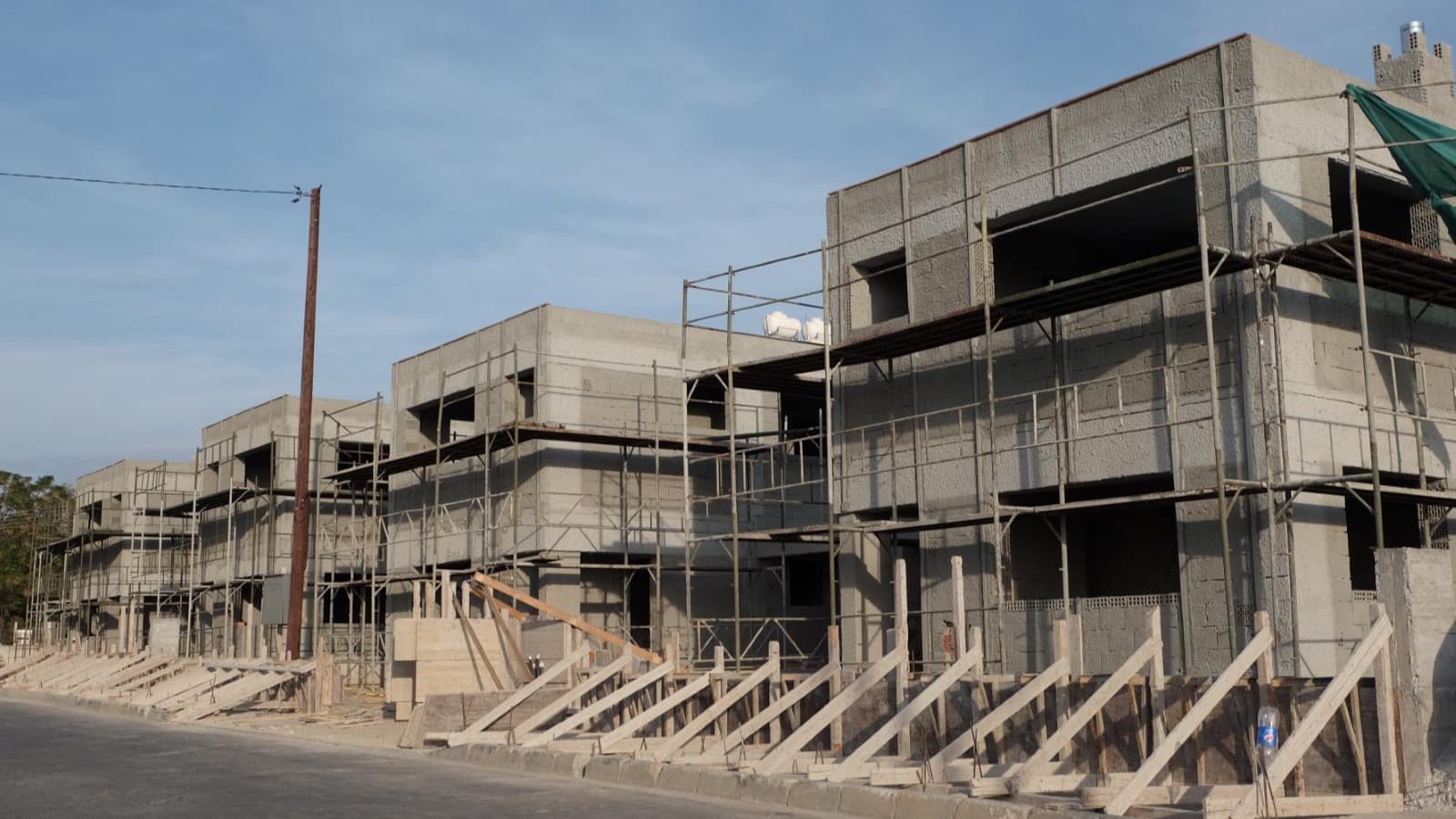
Two schemes, announced on a Tuesday, clarified on a Wednesday
On 9 September the Interior Ministry announced two new housing measures. On 10 September it had to issue a second statement explaining what they actually meant. That gap of one day tells you most of what you need to know about how the announcements landed, and it is why we are writing this at all. The phones started ringing the same week with people asking whether they could get a plot at a quarter price in Peyia, and the answer to that particular question is no.
Both schemes are real, both are worth having if you qualify, and neither of them is aimed at the market we build in. Below is what each one does, the numbers that decide whether you are eligible, and our honest reading of what they will and will not change.
Scheme one: 570 state plots at 25 per cent of market value
The headline measure is the Scheme for the Allocation of Plots to Families on the Basis of Income Criteria. The state holds a large number of plots left over from previous subdivisions, and more than 570 of them are being released in a first phase across all districts. They are sold to eligible households at 25 per cent of their market value.
To qualify you must be a Cypriot citizen and part of a couple, with or without children, or a single-parent family. At least one member of the household must not yet have turned 45 at the point of application. You must already be a permanent resident of the community where the plots sit, or of a neighbouring community within 15 kilometres. You cannot own registered land inside a building zone, and you cannot have sold property in the three years before applying.
The income ceilings are the part people get wrong, so here they are in full. Gross annual household income must not exceed €45,000 for a couple or a single-parent family, €50,000 for a household of three, €55,000 for a household of four, and €65,000 for a household of five or more. Those are gross figures, not net.
The plots run from roughly 325 to 371 square metres and the house you build on one is capped at 150 square metres. You have three years from signing to finish the house, extendable by one. You cannot transfer the plot before the house is complete, and you cannot sell for five years after it is. Applications go to community council presidents, with the district administrations assessing them and handling the subdivisions. The bill was still working through legal and technical review when the scheme was announced, so the application window is not open yet.
Allocation is by priority order rather than first come first served, and the order is revealing: people native to the community who live there, then displaced persons living there, then internal migrants wanting to return, then repatriated Cypriots and emigrants meeting specific conditions, and only then permanent residents of neighbouring communities inside the 15 kilometre radius. Ties are broken in favour of large families first.
Scheme two: the extra floor for your children
The second measure is simpler and, we suspect, will be used far more. An owner of an existing house can build an additional floor or extension for their children or grandchildren even where the building density on the plot has already been exhausted. That last clause is the whole point. Density is the constraint that normally ends this conversation, and the scheme suspends it.
The new unit can be up to 150 square metres, rising to 180 square metres on plots of 1,000 square metres or more. There are parking concessions attached. The new unit cannot be transferred for ten years, other than by inheritance, which is the state making sure this builds homes for families rather than stock for the rental market. Applications run until 31 December 2027.
As a piece of policy design this is the more intelligent of the two. It adds housing on land that already has services, inside settlements that already exist, without a single new road. It also sidesteps the thing that kills most supply measures here, which is that land with permission is scarce and land without it is slow. If you are weighing up a plot purchase instead, the checks that matter before you sign are in our guide to buying land in Cyprus.
What these schemes are actually for
Here is where we will say something that the press releases do not. The plot scheme is not primarily a housing measure. It is a rural repopulation measure wearing housing clothes.
Look at the emphasis on mountainous, remote and disadvantaged areas. Look at the priority order, which puts people born in the community ahead of everyone else and only reaches neighbours within 15 kilometres at the bottom of the list. Look at the five-year sale restriction. This is a policy designed to keep villages alive, and judged on that basis it is a reasonable instrument. The Troodos community housing plans running since 2023 approved 1,075 applications at a cost of €43 million, which is real money spent on a real problem.
Judged as an answer to the affordability crisis in the coastal towns, which is how it has largely been reported, it is close to irrelevant. A young couple priced out of Paphos town is not going to be made whole by a discounted plot in a mountain village 40 minutes inland where neither of them works. Some will take it and be glad. Most will not qualify on the residency test in the first place.
The arithmetic that nobody puts in the announcement
A plot is not a house. This sounds obvious and it is the single most common mistake we see people make with these schemes.
Take the maximum 150 square metre house the scheme allows. Build costs in Cyprus this year run at roughly €1,700 to €2,500 per square metre depending on specification, ground conditions and how much of the finish you are willing to compromise on. That puts the build alone somewhere between €255,000 and €375,000, before professional fees, before connections, before furniture. We set out where that money actually goes in our guide to building a house in Cyprus.
The discount on the plot is worth real money, quite possibly €40,000 to €70,000 depending on where it sits. But a household capped at €50,000 of gross income does not fail to build a house because land costs too much. It fails because a bank will not lend it €300,000 against a staged construction contract. Land was never the binding constraint for that family. Financing was, and the scheme does not touch financing at all. How lenders here actually assess a build is covered in our guide to Cyprus mortgages, and the three-year build deadline makes that conversation urgent rather than optional.
Then there is VAT. A first home can attract the reduced rate, but the thresholds and conditions changed this year and a design that drifts a few square metres past a limit is an expensive piece of drawing. Read VAT on property in Cyprus before you fix the floor area, not after.
Paphos is a different market, and it stays that way
We should be straightforward about our own district. In the first half of 2026 Paphos recorded the highest house prices in Cyprus. The median house sold for €570,000 and the median apartment for €302,500, on 497 transactions worth €258.2 million. More than a fifth of house sales here, 21.3 per cent, went above one million euros. In Peyia the median house price was €790,000.
Nothing in either scheme changes those numbers. The state plots are not in Peyia and were never going to be. What genuinely shapes the Paphos market is supply, and the pipeline there is moving: licensing has sped up to the point where 2,533 single-family and duplex houses were licensed inside 40 working days by the end of August, with 1,242 multi-family buildings licensed inside 80. That is the measure that will eventually feed through to prices here, and we track where it is landing in our Paphos property market update. If you are trying to work out which parts of the district are still sensibly priced, our guide to the best areas to buy property in Paphos is the more useful document.
One more thing needs saying plainly, because we get the question weekly. Both schemes are for Cypriot citizens. If you are a British or other foreign buyer looking at Cyprus, they are not routes available to you, and anyone suggesting otherwise is selling something. What is available is set out in buying property in Cyprus as a foreigner.
Where developers like us actually come into this
There is a third mechanism that gets far less coverage than the two headline schemes, and it is the one that involves us directly. Under the Affordable Housing Units Management Scheme run through the Land Development Corporation, a developer can be granted extra building density on a project in exchange for delivering a number of units at a controlled price, currently around €1,650 per square metre. On an 80 square metre flat that is roughly €132,000 against a market price north of €180,000.
The alternative is that the developer pays the monetary equivalent of the density bonus into the Affordable Housing Fund and sells every unit at market price. Both routes are entirely legal. Around 50 applications have come through the scheme so far, covering more than 2,500 homes, of which roughly 400 are affordable units, and the fund has collected somewhere above €20 million.
Our opinion, and it is a minority one in this industry: the cash-out option is the weak link. It converts a home that would have existed into a number in an account. The money does get spent eventually, and the Land Development Corporation is building with it, but a contribution paid this year becomes a home in three or four years at best. A unit handed over at €1,650 per square metre is a home now. If the state wants the fund to work faster, the price of the cash-out should be higher than the price of building. At the moment, for a developer working in a district where houses sell at these prices, the arithmetic quietly favours writing the cheque.
The 30,000 houses already standing empty
The Scientific and Technical Chamber puts the number of unoccupied structures across Cyprus at roughly 30,000. Set that against the 4,100 homes the Interior Minister expects to reach the market over the next three years and the proportions become hard to ignore. The cheapest housing stock in the country is the stock that already exists.
There is a scheme for this too. Renovate-to-Rent funds owners to bring a property that has stood empty for at least twelve months back into use, in exchange for letting it at an affordable rent for four years. Take-up has been poor. Eighty-one owners applied, 52 were approved, and on the tenant side 106 applications produced 59 approvals. Those are not the numbers of a policy that is working.
We think the reason is straightforward and nobody wants to say it. An owner who has left a house empty for a year is usually not short of money, and four years of below-market rent plus a renovation project is a poor trade for someone in that position. Until holding a property empty carries a cost, subsidising its renovation will keep producing 52 approvals. The same chamber warns that the 5,000 dangerous buildings on the island could become 15,000 within five years without intervention, which is the same problem seen from the other end. We wrote about the inspection side of that in Cyprus building inspections in 2026.
What we would do
If you are a Cypriot household under the income ceilings with roots in one of the participating communities, apply. A plot at 25 per cent of value is a serious benefit and the priority order is working in your favour. Get a build cost from someone who will put it in writing before you sign anything, because the three-year deadline starts at signature and the cost, not the land, is what will decide whether you finish.
If you own a house with grown children and a plot that has run out of density, the extra floor scheme closes on 31 December 2027 and it is the most generous thing on the table. Talk to a designer this year rather than next.
And if you are buying in Paphos, treat these announcements as background noise. They will not move the price of what you are looking at. The costs that will actually affect you are the ones set out in the cost of buying property in Cyprus, and the risk that will actually affect you is who you buy from, which is the subject of choosing a property developer in Paphos. Housing policy is a slow instrument. Due diligence is a fast one.
Ask us what it really costs.
Whether you are weighing up a state plot, an extra floor or a finished home in Paphos, send us the details and we will give you an honest build cost and a realistic programme. If a scheme suits you better than buying from us, we will tell you that too.