Everyone’s Lift, Nobody’s Bill Jointly-Owned Buildings in Cyprus
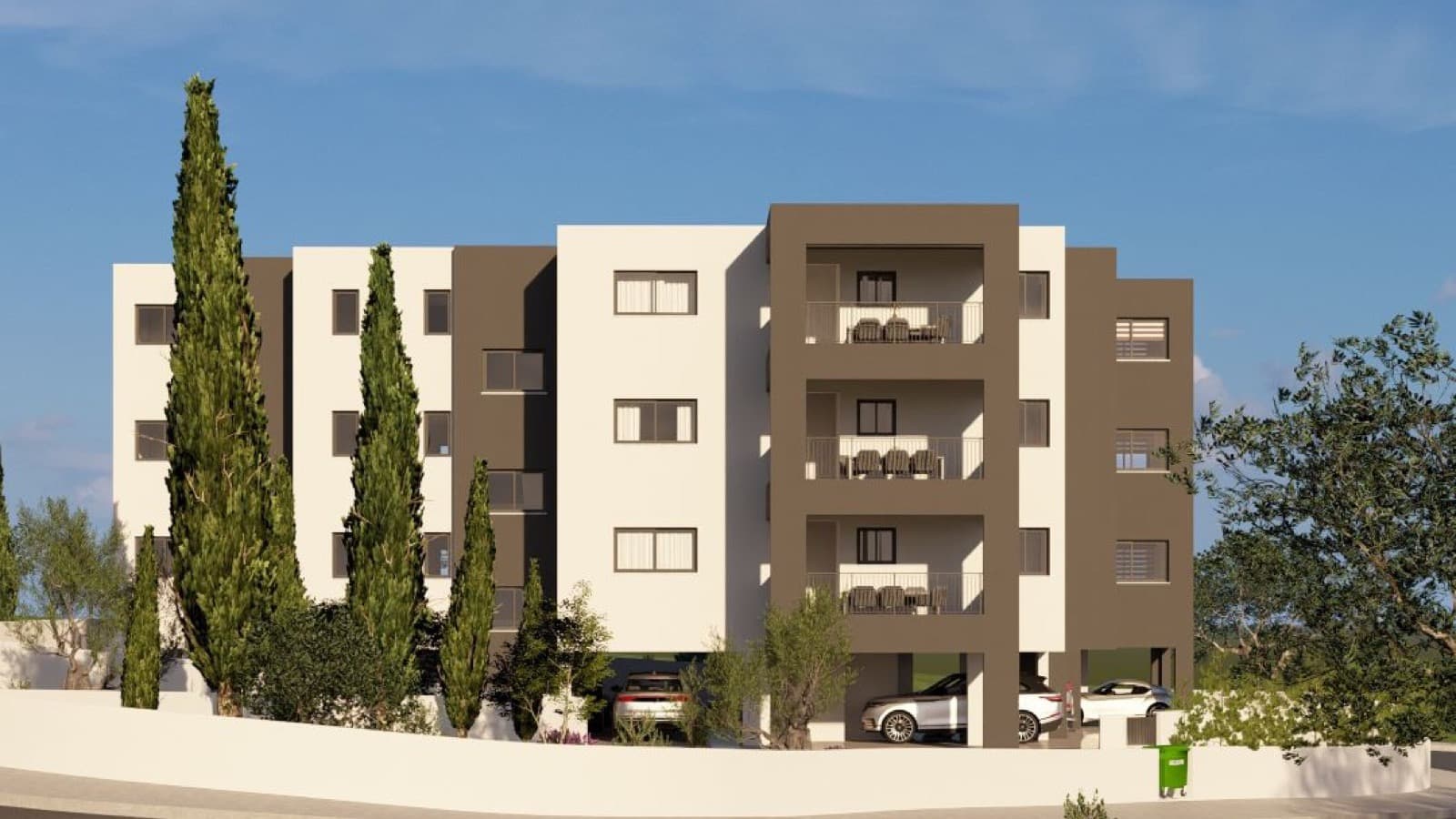
The part of the purchase nobody asks about
People ask us about the view, the handover date, the title deed and the transfer fees. In fifteen years of building apartments in Paphos, almost nobody has opened with the question that will shape the next thirty years of their ownership more than any of those: who is going to run this building after we leave, and what happens when one of the neighbours stops paying.
It is worth asking now more than at any point in the last decade, because Cyprus is about to have a great many more apartment buildings. In the first four months of 2026 the Statistical Service approved 5,184 residential units inside apartment buildings, against 2,789 in the same months of 2025. That is an increase of 85.9 per cent. Across the first half of the year 4,401 building permits were issued in total, up 29.5 per cent, with a combined value of €2.57 billion against €1.73 billion a year earlier.
Every one of those blocks will become what Cypriot law calls a jointly-owned building. And the law governing jointly-owned buildings is the weakest piece of property legislation in the country, which the government, the developers, the owners and the opposition all agree on, and which none of them has managed to fix in three years of trying.
What a jointly-owned building actually is
The framework sits in Part IIA of the Immovable Property (Tenure, Registration and Valuation) Law, Cap. 224, inserted by amending Law 6(I) of 1993. A building becomes jointly-owned once it contains at least five units, whoever owns them. Buildings of two to four units are not automatically caught but can choose to register as jointly-owned, and in practice it is usually worth doing.
Once registered, the building has to hold its first general meeting within three months and elect a management committee from among the unit owners. After that, a general meeting has to be held within fourteen months of the previous one. The committee decides by simple majority and the president gets no casting vote, which sounds like a small detail until you have sat in a four-person committee that has deadlocked two to two over a roof.
A general meeting needs a quorum of fifty per cent of the owners entitled to vote, present in person or by proxy. In a block where a third of the flats are holiday homes owned from Manchester or Moscow, getting to fifty per cent is the first real obstacle, and it is the reason so many buildings in this district have a committee that exists on paper and has not met in years.
Fire, lightning and earthquake cover is compulsory, with the committee setting the sum insured. Anything beyond those risks needs the agreement of owners holding more than fifty per cent. We mention this because a surprising number of blocks in Cyprus carry the statutory minimum and nothing else, and the owners only discover it when a pipe goes through three ceilings.
The numbers behind the arguments
Cyprus has 20,919 jointly-owned buildings containing 219,635 residential units. Of those, 14,208 buildings covering 159,659 units are properly registered. The remaining 6,711 buildings, holding 59,976 units, are not registered at all. That is close to a third of the country’s apartment stock sitting outside the system that is supposed to govern it, and roughly half the population of Cyprus lives in a building of this kind.
An unregistered building has no lawful committee, no legitimate budget and no mechanism for anything. Whoever is holding the keys to the meter cupboard is effectively in charge. If you are buying a resale flat in an older Paphos block, the single most useful question you can ask the vendor’s lawyer is whether the building is registered and when the last general meeting was held. A vague answer is an answer.
What you are actually paying for each month
Common expenses cover the things that belong to everybody: the lift, the stairwell lighting, the pool, the landscaping, the water for the irrigation, the cleaning, the building insurance, the pump, the gate motor, and the repairs to any of it. In a typical Paphos block without a pool, that lands somewhere between €30 and €70 a month. A managed development with a pool and proper grounds runs from about €50 to €250 depending on the size of the unit, and the larger resort-style complexes with security and extensive landscaping go past €300. We cover the wider picture of running a home here in the cost of living in Cyprus.
Your share is worked out by the area of your unit, not by how much of the building you use. That principle is settled and it catches people out constantly. The owner of a ground-floor shop pays towards the lift. The owner who never swims pays for the pool. The couple who spend two weeks a year in their flat pay the same twelve monthly contributions as the family living there permanently. None of that is negotiable and none of it is unfair once you understand that you bought a share of a building rather than a box with a door.
What should worry you is not the monthly figure but whether anything is being set aside. Flat roofs in this climate need attention. Render needs repainting. Pool plant has a finite life and lift controllers have a shorter one. A building that collects exactly what it spends each year is a building that will one day send every owner a demand for four thousand euro at once, and that is the moment the arrears start.
The hole in the middle of the law
Here is the flaw that everything else follows from. Under the current law, a management committee faced with an owner who refuses to pay can sue them. That is the whole of the remedy. It cannot register a charge against the unit, it cannot stop the owner selling, and it cannot withhold anything meaningful.
Suing costs money the committee does not have, because the money it does not have is precisely the thing it is suing about. It takes years. And at the end of it the defaulting owner can sell the flat, walk away from the judgment and leave the arrears behind for the remaining owners to absorb. We have watched this happen in buildings we did not build, and it does not take many defaulters to break a budget. Lose five per cent of your income and you stop painting. Lose fifteen and you stop servicing the lift.
Any law that creates an obligation without creating a way to enforce it is not really a law, it is a suggestion with a statute number. That is the honest state of jointly-owned building regulation in Cyprus in 2026.
What the stalled bill would change
A reform bill was submitted in August 2023, revised and resubmitted in 2025, and now runs to more than eighty pages. It is a serious piece of drafting and most of it is right.
The provision that matters most is a Certificate of Common Expenses Clearance. A unit could not be sold, leased or assigned without one, and the Land Registry would be unable to complete a transfer unless the management committee had issued it. Alongside that, outstanding common expenses would cancel a buyer’s right to a transfer fee exemption or reduction, regardless of whether the transaction is subject to VAT or meets the other conditions. If you want to understand how much that exemption is worth, the arithmetic is in the true cost of buying property in Cyprus, and the transfer mechanics themselves are in title deeds in Paphos.
The bill also creates a Registration and Supervision Service for management committees, with standard internal regulations, the power to impose financial penalties, the ability to register a memo against a unit and clear authority to pursue debt through the courts. Committees would have to maintain a reserve fund for repairs and maintenance, carry proper insurance, and would be able to bar a non-paying owner from communal facilities while still allowing access to their own front door.
Two smaller changes are worth knowing. The apportionment formula becomes explicit: the covered area of the unit, plus 40 per cent of the covered area of terraces and balconies, plus 20 per cent of uncovered area, with variations for mixed-use blocks. And general meetings would be allowed to run over video and audio link, which for a district where a large share of owners live abroad is the difference between a quorum and a wasted Saturday.
Why it has not passed
The sticking point is not the substance. It is who does the work.
The bill hands registration, supervision, dispute resolution and fining powers to the five District Local Government Organisations. The DLGOs do not want them. They say they were left out of the drafting, that they have no structure, premises, IT systems or staff for the role, and that the administrative fees proposed in the bill would not come close to covering the cost. Their president, Constantinos Yiorkadjis, has put it in terms that are hard to argue with: the organisations are being asked to deliver a critical public service with no permanent solution for sustainable funding. They have been responsible for dangerous buildings since April 2025 and say they still lack clear guidance and money for that job too.
The House Interior Affairs Committee, chaired by AKEL’s Aristos Damianou, has now halted a scheduled discussion twice in around eighteen months because the Interior Ministry and the DLGOs could not agree. In January 2026 Damianou said he would not play the game of extension after extension, and no further meetings would be scheduled until an agreed text was formally submitted. A financial impact study was finished in December 2025, and the analysis of it is still outstanding.
Interior Minister Constantinos Ioannou has publicly accepted that the existing law contains serious deficiencies and falls short on both proper management and effective enforcement. The Cyprus Property Developers Association spent the summer pressing for progress in the autumn session, with its director general Mercina Isidorou arguing that building and public safety cannot be left to chance. As of this month, nothing has moved.
The management company problem
While the law sits still, a market has grown in the gap. Owners in some larger complexes report annual common expenses of €1,000 to €1,400 per unit. In a development of more than a hundred units, that is €100,000 to €140,000 a year collected by a private company with no statutory obligation to publish audited accounts and no regulator to answer to.
Some of these firms are connected to the developer who built the scheme. Some buyers have been asked to sign a management agreement as a condition of purchase, before they have met a single neighbour or had any chance to constitute an owners’ committee. A buyers’ representative told Phileleftheros earlier this year that parliamentary reluctance on the bill may have something to do with the financial exposure of interested parties, which is a polite way of saying what most people in this industry say less politely in private.
We will be direct about our own position, since we are part of the industry being described. Collegium does not tie buyers to a management company. We hand a building over with the committee properly constituted, the first general meeting convened within the statutory window, and the accounts open. A developer who wants a permanent revenue stream from a building after handover has an interest that is not the same as yours. We make the broader version of this argument in choosing a property developer in Paphos.
Where building safety comes into it
This stopped being an administrative argument in April 2026, when part of a building in Germasogeia collapsed and two people were killed. In June, balconies came off a seven-storey block in Kapsalos. Both buildings were jointly-owned. In a building with no reserve fund, no quorum and no way to compel a contribution, structural maintenance is the first thing deferred and the last thing funded.
The government’s response has been to tighten the separate dangerous buildings law rather than fix the one underneath it. Fines on first conviction have gone from €10,000 to €20,000 and on subsequent convictions from €20,000 to €40,000, with administrative penalties doubling to €40,000. New fixed penalty notices carry €2,000 for failing to fence a dangerous building and €1,000 for failing to seal one, waived if paid within 45 days. Owners get 30 days to make written representations, and authorities can disconnect water, request an electricity disconnection, or carry out the repairs themselves and recover the cost as a charge on the property, repayable over up to 36 instalments with a maximum two per cent fee.
Running alongside is a proposal for periodic technical inspections of buildings, which has been described as an MOT for structures. We looked at that in detail in Cyprus building inspections in 2026. Our view has not changed: inspections identify the problem and fines punish the failure, but neither creates the money to carry out the repair. That is what the reserve fund in the stalled bill would have done.
If you are buying a flat in Paphos this year
None of the above is a reason to avoid apartments. We build them, we think they are the best value in this district, and the buildings that are run properly are run very well. It is a reason to do five specific things.
Ask whether the building is registered as jointly-owned and get the registration number. If it is one of the 6,711 that is not, you are buying into a building with no lawful way to make decisions, and you should price that in or walk away.
Ask for the last two years of common expense accounts and the minutes of the last general meeting. Two years of accounts tells you what the building really spends. The minutes tell you whether anybody turns up. If neither exists, you have learned something more useful than either document would have told you.
Ask what the arrears are. Not whether there are any, but what they are, in euro, and how many units they sit across. Under the current law those arrears do not follow the seller, and if the bill passes in anything like its current form a clearance certificate will become a condition of your own eventual resale. That matters when you come to sell, and the rest of that calculation is in selling property in Cyprus in 2026.
Ask whether there is a reserve fund, how much is in it, and who holds it. A building with twelve months of contributions set aside is a building that has thought about its fifteenth year.
And if you are buying off-plan, put the handover arrangements in the contract. When the first general meeting will be convened, who convenes it, what the developer hands over, and whether you are being signed into a management agreement you did not choose. The rest of the off-plan mechanics are in buying off-plan property in Paphos, and what we are currently building is on our apartments page. If you are buying to let, note that a committee can regulate a good deal of what happens in the common parts, which we cover in renting out property in Paphos.
Where we come out on it
Pass the bill. Not because every clause is right, but because the clearance certificate alone would do more for the condition of Cypriot housing stock than the last twenty years of good intentions. Make the arrears follow the flat and the arrears stop accumulating, because a debt that blocks a sale is a debt that gets paid.
The DLGOs are right about the money and wrong about the delay. They should not be asked to run a national registry on fees that do not cover it, and the Interior Ministry has had three years to resolve a funding question that is not, in the scheme of a €2.57 billion half-year of building permits, a large sum. Fund it properly and move. Meanwhile 59,976 units sit in unregistered buildings, apartment approvals are up 85.9 per cent, and Paphos residential prices rose 9.6 per cent year on year in the second quarter, which we set out in the Paphos property market in 2026. Every month of delay adds buildings to the problem.
There is one thing that does not need parliament. A building with an engaged committee, open accounts and a reserve fund works under the 1993 law as it stands. It is harder than it should be, and it depends on a handful of owners being willing to do unpaid administrative work for their neighbours. But it works. If you are buying into a block, be one of those owners. It is the cheapest insurance you will ever buy.
This article describes a bill before parliament and the law currently in force, and it is not legal advice. Check your own position with a Cyprus lawyer before acting on any of it.
Want to see how a building should be handed over?
Ask us for the handover pack from one of our completed Paphos blocks. You will see the committee arrangements, the first-year budget and what the common expenses actually buy, before you commit to anything.